
Services

Site & UX design

On-brand layouts and user journeys—from wireframes and Figma handoff through production-ready WordPress templates your marketing team can ship without a developer on every headline.

Figma design system with color, typography, and effect tokens on screen

Production-ready UX from your design system

We design and build WordPress experiences that look on-brand, load fast, and stay editable—whether we start from sketched flows or your agency Figma files. A short discovery pass aligns goals, audiences, and the templates that actually support conversion.

We map what belongs in custom layout versus reusable patterns, then ship accessible components in Gutenberg or ACF with documented handoff and guardrails. Across 100+ projects we have learned where bespoke page types earn their weight—senior-led delivery with performance budgets on critical URLs from the first sign-off, not after launch when traffic is already paying the price.

Tablet and phone showing the same responsive website layout

Design that converts

Clear journeys, purposeful hierarchy, and components that guide visitors toward enquiry—not generic theme demos that look fine in a screenshot and fail in analytics.

We prototype primary paths—landing, product, careers, contact—and stress-test hierarchy on real copy lengths so desktop and mobile do not diverge into one-off CSS. Analytics-friendly markup and event hooks are part of the template set, not a phase-two add-on.

Editor updating product imagery in a website builder on a laptop

Built for editors, not just launch day

Reusable blocks and patterns wired into WordPress so marketing can publish and iterate without opening a ticket for every headline or layout tweak.

Field groups, block styles, and preview-ready patterns let editors swap imagery and copy without breaking layout. We document what is locked versus flexible so brand and legal stay intact while campaigns ship on schedule.

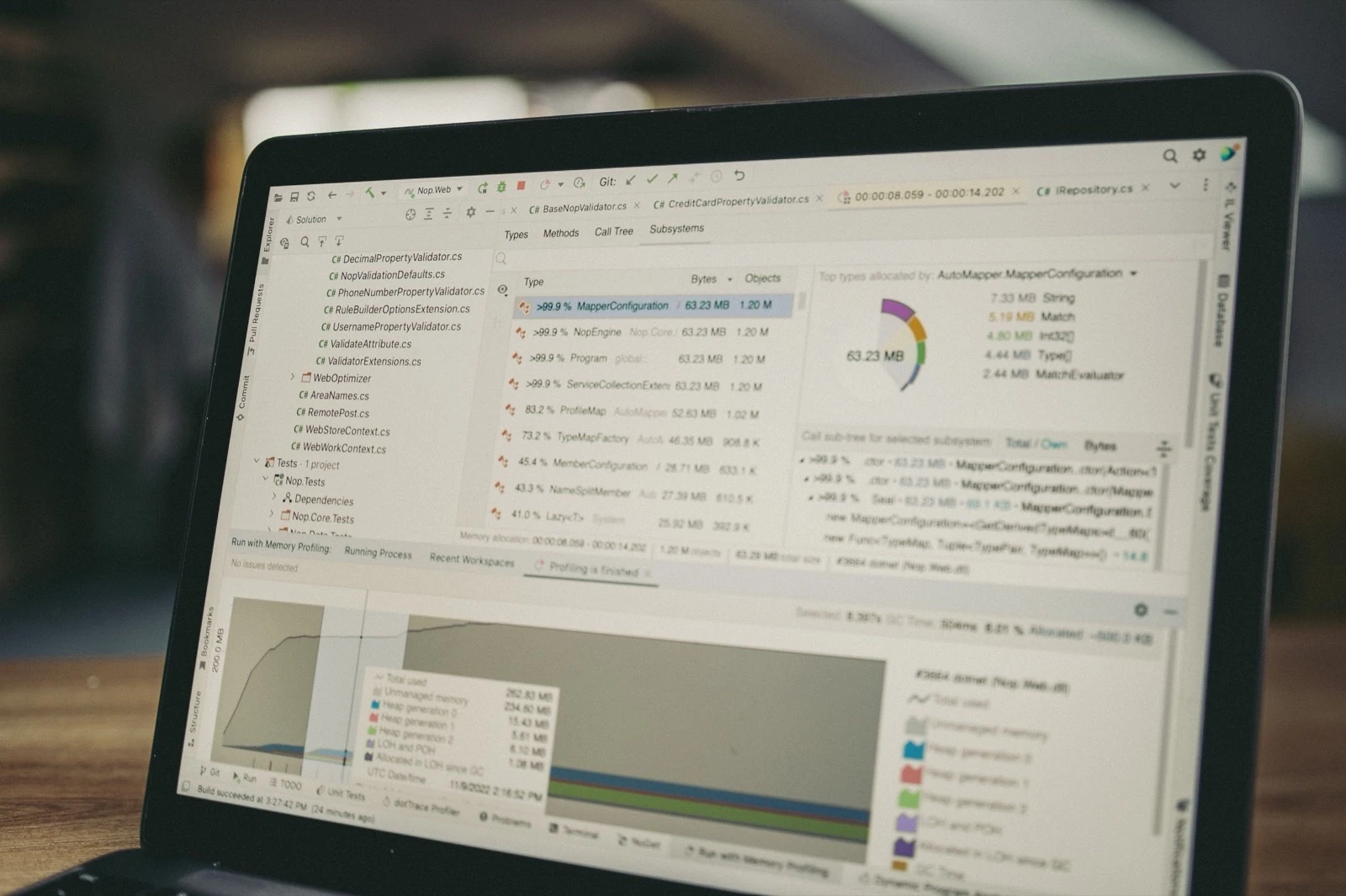
Developer profiling memory usage and performance metrics on a laptop

Performance as a design constraint

We scope custom layout where it earns its weight and standardise the rest—critical templates measured against budgets before sign-off, every release.

Hero, listing, and high-traffic templates carry Lighthouse and weight limits in the SOW; shared chrome stays lean. That discipline carries into merchandising seasons and plugin updates so PageSpeed does not cliff after go-live.

UI designer workspace with Figma open on a monitor showing mobile screen layouts
How we deliver

What you get on every engagement

Accessibility, editor tooling, and speed criteria are written into deliverables—not slide-deck promises we revisit after launch.

Older couple using a laptop together on a sofa

Accessible, inclusive experiences

Semantic structure, contrast, focus states, and keyboard paths considered in design and build—targeting WCAG 2.2 AA on priority templates with Lighthouse accessibility scores documented at launch.

Priority templates are checked for contrast, focus order, and screen-reader labels before handoff; regressions are caught in QA, not by your support queue after a campaign goes live.

Figma design system with color, typography, and effect tokens on screen

Editor-first WordPress patterns

Block libraries, field groups, and guardrails so content teams publish confidently—fewer one-off page builds and less reliance on developers for routine updates.

We align patterns with your content model—teams, products, locations, campaigns—so new pages reuse proven layouts instead of cloning page-builder experiments that are painful to maintain.

Laptop showing analytics dashboards with user, cohort, and device metrics

Measurable performance outcomes

Core Web Vitals and PageSpeed targets on key URLs, with acceptance criteria in the SOW—so speed holds after merchandising, campaigns, and plugin updates.

We capture baselines at launch and re-run audits after major content or plugin changes, flagging drift before it shows up in Search Console or paid-media quality scores.

Work with us

Send your URL. Get the plan.

We reply with a prioritized technical backlog — performance, stability, and conversion friction called out explicitly.